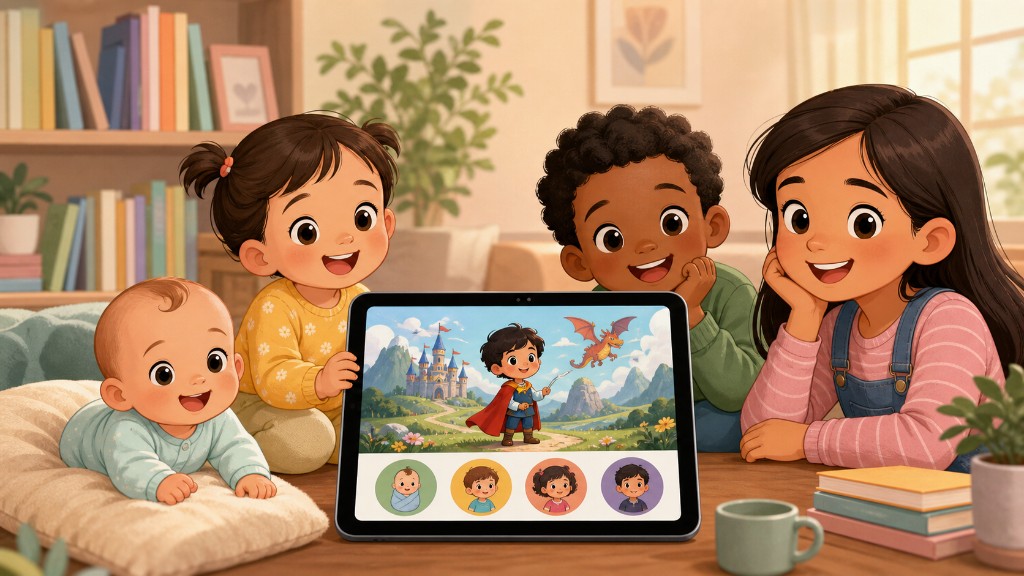
“Which story should I pick?” usually comes down to “how old are they?” Long adventure text bores a baby; very short repetition leaves an older child wanting more. When you choose an age-appropriate children's storybook, both theme and language level matter — and with a personalized book the gap is even clearer: when your child's face and name are on the page, the story has to feel right for them.
This guide explains HeroKidStory's listening/reading age bands (0–1, 1–3, 3–5, 6+) exactly as they work in the product, with theme ideas and practical tips for each band.
Why the age band matters
A personalized book brings together three things: name, face (illustration), and story. The age band sets the rhythm of that third piece:
- Text length per page
- Word choice and sentence structure
- Plot complexity
When you create a book on HeroKidStory, you pick the listening/reading age in step one; the system tunes the story to that band. The wrong band can make the book feel “too babyish” or “too hard” — the right one makes a child say “this is my book.”
For gift context, see our birthday gift guide too.
HeroKidStory age bands (at a glance)
| Band | Who it's for | Story feel |
|---|---|---|
| 0–1 | Baby; parent/caregiver reads or plays audio | Very short, repetitive, sensory moments |
| 1–3 | Early toddler | Simple actions, predictable rhythm |
| 3–5 | Preschool | Early adventure, “I'm the hero” |
| 6+ | Developing reader | Richer events, emotion, dialogue |
Every band stays visually led; text shortens or lengthens with age. Read-aloud audio is especially powerful for 0–3.
0–1: first book moments
In this band the child is usually the listener — you read aloud or play audio in the app. The story carries a single sensory moment more than a plot chain: light, sound, touch, a familiar face.
Theme ideas
- Nature: Soft animals, seasons, day and night
- Educational: Colors, simple sounds (meow, buzz) — play, not textbook
- Fairy tale (gentle): Short, warm, fear-free tone
Tips
- One idea per page; no long dialogue
- Repetitive patterns (“Look, Emma sees… She sees again…”) soothe babies
- Use a clear face in the photo; see photo tips in our FAQ
How to read: Slow pace in your lap, point at pictures, repeat the same book — normal and helpful at this age.
1–3: movement and discovery
Children start walking, pointing, and short phrases. Stories revolve around simple actions: find, give, hide, play.
Theme ideas
- Adventure (light): Short trip — garden, playground, corner shop
- Fairy tale: Animal friend, magic object (not scary)
- Sports: Ball, bike, dance — matches their love of movement
- Nature: Small discovery (leaf, bug, puddle)
Tips
- “You're the hero” lands strongly; name and face on the page matter a lot
- Short sentences, clear emotions (happy, curious, surprised)
- Browse example books for simple, warm cover compositions
How to read: Ask “Where?” “Who's that?” Encourage pointing when their name appears.
3–5: “I'm the hero” years
Preschool imagination takes off. Children want to be at the center of the story; adding a friend, sibling, or pet is popular.
Theme ideas
- Adventure: Space, forest, funfair, secret island
- Fairy tale: Princess/hero, dragon (funny or friendly), magic helper
- Nature: Camp, sea, farm — discovery plus animals
- Educational: Numbers, sharing, courage — woven into the plot naturally
Tips
- Pick themes from what your child loves right now (dinosaur week, space week…)
- You can add multiple characters; use one clear photo each
- As a gift, read-aloud plus PDF is a strong combo — see pricing for current options
How to read: After each page ask “What would you do?” — opens the door to pretend play.
6 and up: longer-breath stories
Developing readers want more text and light problem-solving. Friendship, team play, and inner voice (“I was a bit scared but I tried”) fit this band.
Theme ideas
- Adventure: Mission feel — treasure map, science station, time travel (age-appropriate)
- Sports: Race, practice, team spirit
- Educational: Curiosity topics (space, ocean, history) — hero narrator, not teacher lecture
- Nature: Environment, animal care, nature walks
Tips
- You can add a short special request (e.g. “include a red bike”) within content guidelines
- If your child reads alone, longer text motivates; visuals still support every page
- Study atmosphere and pacing in books on our examples page
How to read: Together first, then solo; keeping “my book” on the shelf builds confidence.
How to choose the right band
- Think about the age of the child who will listen to or read the book (if it's a gift, the recipient's age).
- On create — step 1, select the listening / reading age band.
- Set theme and characters from your child's interests; the band handles text, you keep theme freedom.
You can make two books in the same theme at different bands for two children — siblings each become the hero of their own story.
Frequently asked questions
Can the age band differ from the character's age?
Yes; what matters is the listening/reading level. The band sets text length and vocabulary. Character age feeds illustration and name; if unsure, always pick the band for the child who will hear or read the story.
Which themes work at every age?
Nature and a soft fairy tale tone fit most bands; adventure is strongest at 3–5 and 6+. Avoid fear, chase scenes, or complex plots at 0–1.
How long until the book is ready?
Most personalized e-books are ready in about 10–15 minutes per order; busy periods can take longer. You receive a download link by email when it's done. Details on FAQ and pricing.
Next step
Once the age band is clear, theme and photos come next. Browse example books first, then create your own hero.